
Plush baby Jesus doll
A soft baby Jesus doll can quietly become part of family life: near a crib, in a prayer corner, or in a child’s hands during bedtime prayers. It is not just a toy, but a small reminder of God’s closeness in ordinary days.
Many families find that a plush baby Jesus doll helps children picture the tenderness of the Nativity in a way they can literally hold onto. There is nothing complicated about it: just a simple, soft reminder that faith can be gentle, familiar, and close to the heart.
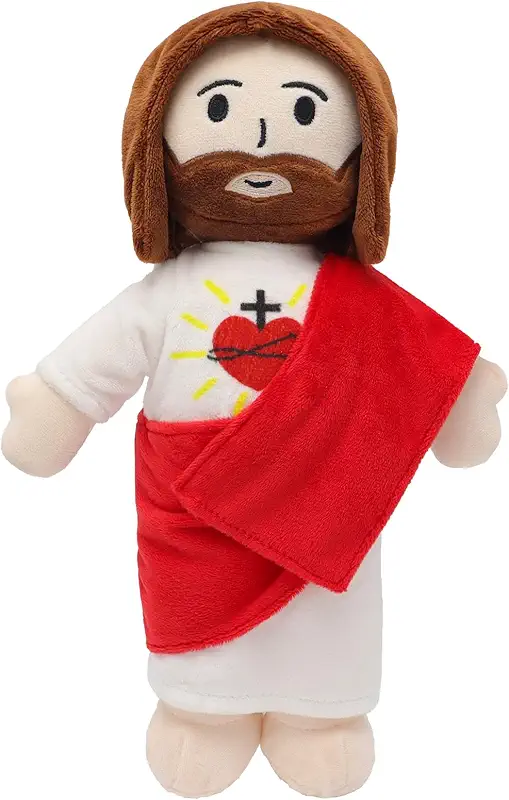
Living faith with a soft, simple presence
For many American Catholic families, faith is woven quietly into ordinary routines: packing lunches, driving to school, folding laundry, and tucking kids into bed. A plush baby Jesus doll fits naturally into this kind of life. It does not need to be the center of attention or a special showpiece. Instead, it can sit peacefully on a nightstand or in a basket with favorite stories, ready to be picked up when a child’s heart is open.
I remember the first time we brought a soft Jesus doll into our home. We did not make a big announcement. We simply placed it by the children’s books. A few days later, I found one of the kids sitting on the couch, holding the doll close while looking through a picture Bible. No one told them to do it. It just felt natural, and that quiet moment stayed with me.
Over time, small things like this help shape how children experience faith. They learn that Jesus is not distant or abstract, but close and gentle, present in the middle of playtime and bedtime, in joy and in tears. A plush baby Jesus doll is not a replacement for prayer, Mass, or the sacraments. It is simply a soft reminder that can accompany those deeper realities.
How a plush baby Jesus doll can fit into daily life
Because it is soft and approachable, a plush baby Jesus doll often finds its own place in a child’s routine. Here are some quiet and natural ways families tend to use it:
- Bedtime prayer companion: Children may like to hold the doll while you pray a short evening prayer or a simple Hail Mary together.
- Nativity focus: During Advent and Christmas, the doll can serve as a gentle reminder of the manger and the humility of Jesus’ birth.
- Comfort object: Some kids reach for the doll when they feel nervous, lonely, or unsettled, especially at night.
- Storytime partner: Holding the doll while you read Bible stories helps connect words and images to something tangible and comforting.
- Prayer corner detail: Placing the doll in a small family prayer space can soften the atmosphere and invite children to approach more freely.
None of this has to be forced. Children have a way of making things their own. The role of a plush baby Jesus doll is simply to be available, quietly present, ready to be held whenever a child’s heart reaches out.
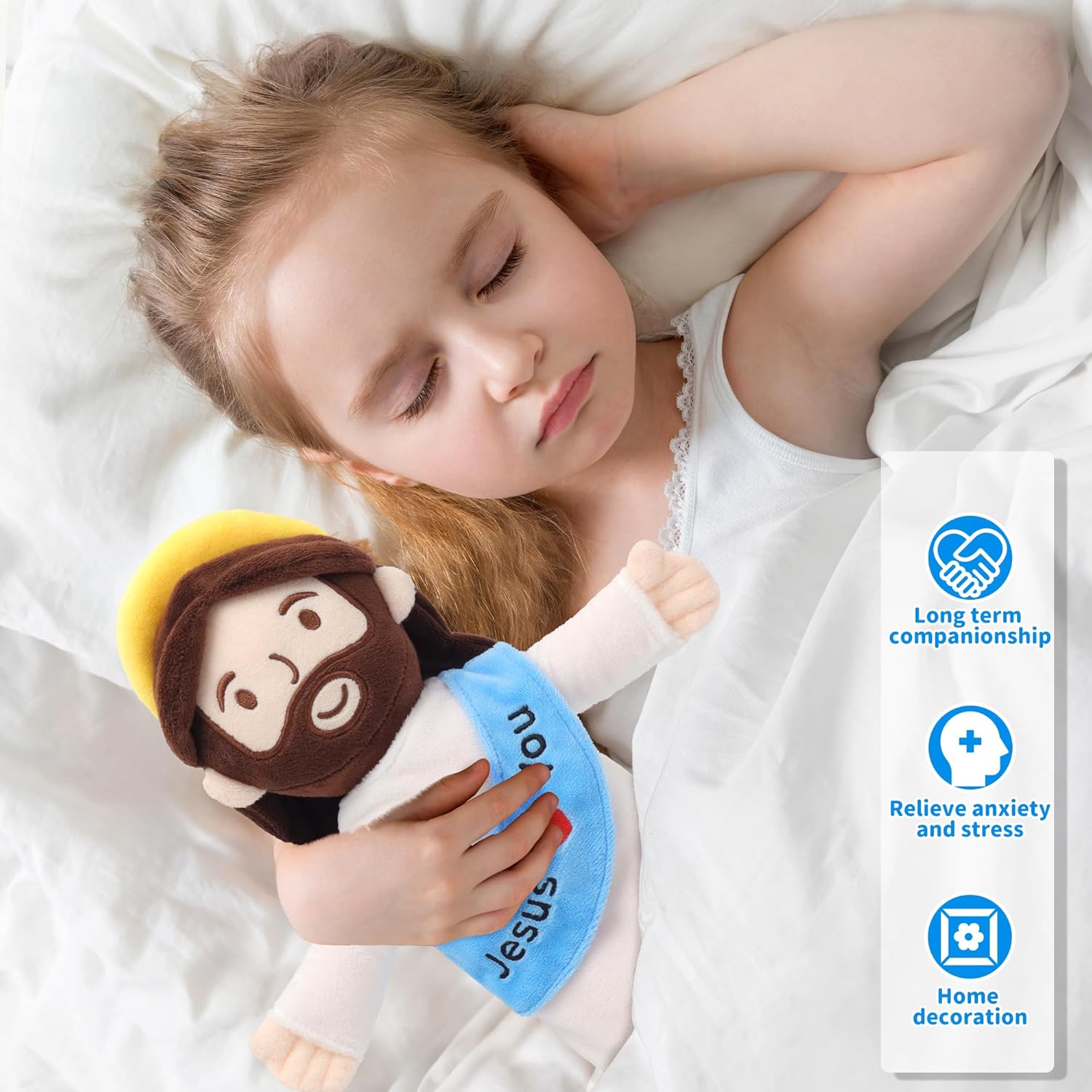
What to look for in a plush baby Jesus doll
Different families value different qualities, but a few simple things can make a plush baby Jesus doll more suitable for prayerful, everyday use with children. It does not have to be perfect. What matters most is that it gently supports your family’s way of living the faith.
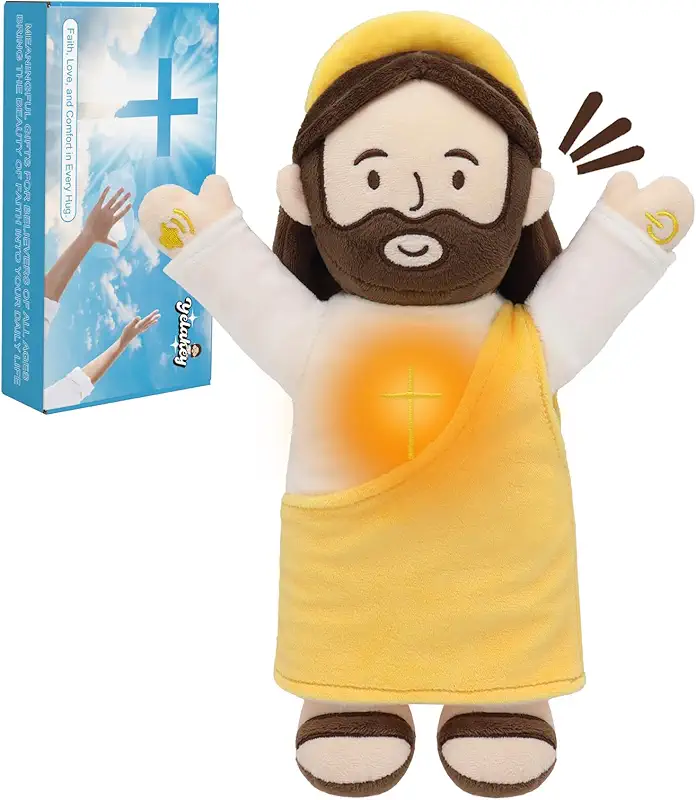
Softness and safety
Since children often sleep with their favorite plush toys, it helps if the doll is genuinely soft and free of rough or sharp parts. Sewn-on details and securely attached pieces are usually kinder for small hands and safer at night. Many parents also appreciate when the doll is machine washable or easy to clean, because real family life includes spills and sticky fingers.
Simple, gentle design
A simple, peaceful facial expression can speak more clearly to a child than something very dramatic. Many families prefer a baby Jesus design that looks calm, approachable, and not overly cartoonish. Modest clothing, soft colors, and a humble style tend to fit well with a Catholic sense of reverence, without feeling stiff or formal.
Durability for everyday use
If a child truly loves the doll, it will be carried around, dropped, slept on, and hugged many times a day. Strong stitching, decent fabric, and a solid overall build help the doll last longer and stay meaningful over time. A plush baby Jesus doll is not just for display; it often becomes a real companion, so it needs to hold up reasonably well.
I still remember finding our Jesus doll tucked into a shoebox “manger” that the kids had filled with scraps of fabric. It wasn’t something we planned. They simply wanted to make a bed for Him. Moments like that reminded me that a simple plush baby Jesus doll can open up space for children’s own creativity and devotion without any pressure.
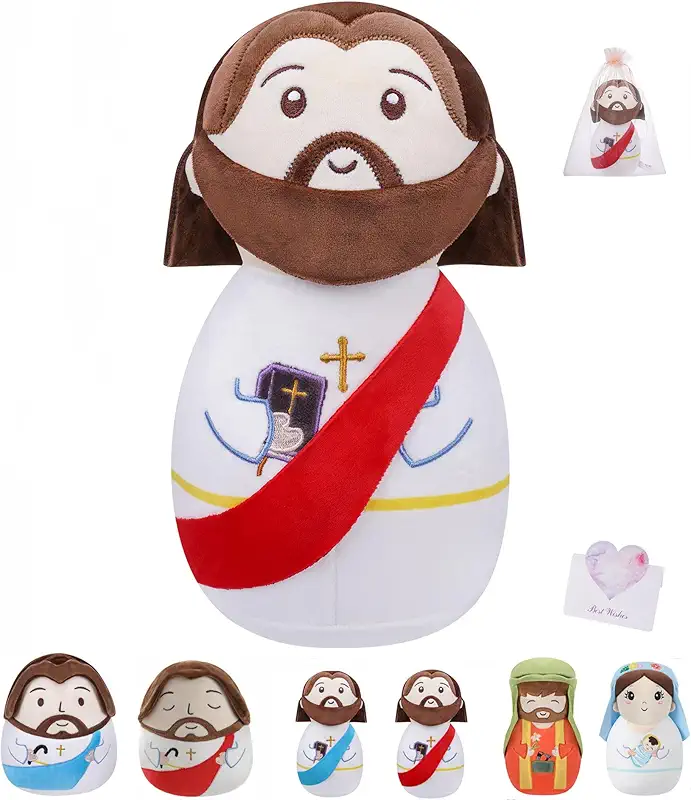
Using a plush baby Jesus doll in prayer routines
For many of us, praying with children is beautiful but also challenging. Kids get restless, distracted, or tired. A small plush baby Jesus doll can help ground prayer in something they can touch. It does not solve everything, but it can make the moment feel more real and less abstract for them.
One simple habit is to place the doll in the center of a small family prayer time. You might light a candle, say a short prayer, and let a child hold the doll while others take turns offering intentions. This doesn’t need to be long or elaborate. Even two minutes can be enough to build a sense of peace and togetherness.
Another gentle practice is to bring the doll out during Advent. You can connect it to the manger scene, talking about how Jesus came as a baby, small and vulnerable. The softness of the doll can echo that tenderness in a way children instinctively understand.
I have noticed that when our children hold a plush baby Jesus doll, they sometimes start talking to Him in their own words. They might say things like, “Jesus, today I was scared at school,” or “Jesus, thank You for Grandma.” These simple, honest words are precious, and the doll quietly supports that conversation of the heart.
Gifts, sacraments, and special moments
A plush baby Jesus doll often becomes part of meaningful days in a child’s life. Some families like to give one at Baptism, combining the sacramental celebration with a soft reminder of Jesus’ nearness. Others choose it for a godchild, a niece or nephew, or a close friend’s baby as a gentle way of saying, “You are loved, and your faith matters.”
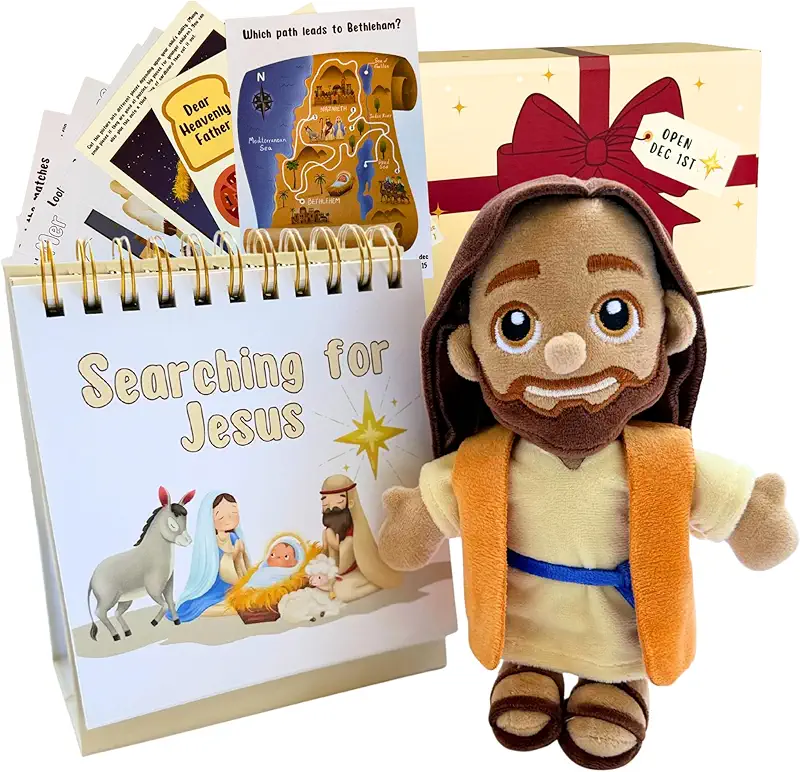
During Christmas, especially, a plush baby Jesus doll can be part of family traditions. Some households keep the doll hidden until Christmas morning, then place it in the manger as the first thing the children discover. Others let the kids carry the doll during a simple home reenactment of the Nativity. These small traditions do not have to be perfect to be meaningful. Children remember the warmth, not the staging.
Personally, I have seen how a baby Jesus doll can comfort a child during hard times as well. Once, one of our kids was recovering from an illness and spent days resting on the couch. The only toy they kept close was their plush baby Jesus doll. They didn’t say much about it, but I could tell it gave them a sense of being held and not alone.
If you are a godparent, aunt, uncle, or close friend, offering a plush baby Jesus doll can be a gentle way of supporting the parents’ efforts to raise their child in the faith. You are not lecturing or pressuring anyone, just adding a small, soft sign of love to their home.
Talking with children about Jesus in simple words
A plush baby Jesus doll can open the door to simple conversations about who Jesus is, why we celebrate His birth, and how He loves us. With young children, these conversations do not need to be long. A few honest sentences said with love are often enough.
Holding the doll, you might say something as simple as, “Jesus came as a baby, just like you did, because He wanted to be close to us.” You can talk about how Mary and Joseph cared for Him, how He was wrapped and held, how He grew up in a real family. These are things children intuitively understand from their own experience.
Sometimes, seeing a child rock the doll or tuck it in reminds us that the birth of Jesus is not just a story from the past, but something that touches how we live and love right now. The doll itself is ordinary fabric and stuffing, yet it points beyond itself to a mystery that reaches into everyday life.
Caring for a plush baby Jesus doll with reverence and realism
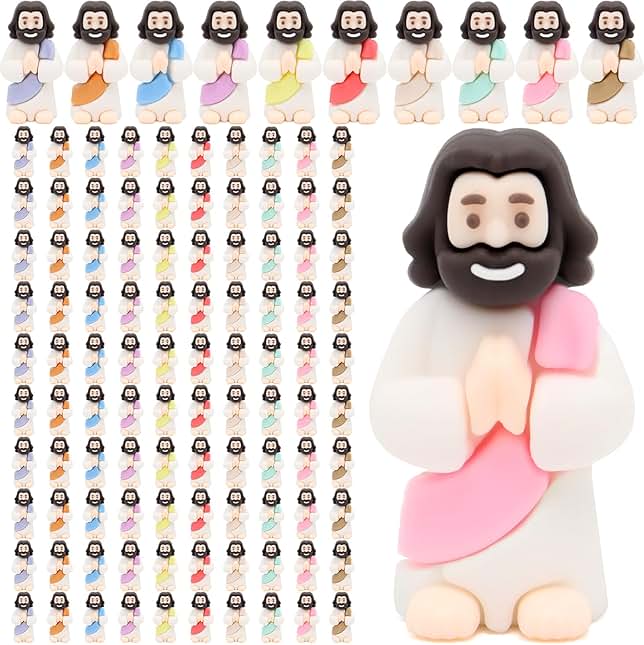
Because a plush baby Jesus doll is both a toy and a devotional object, many parents wonder how to handle it respectfully without making children anxious or fearful. In real-life Catholic homes, things get messy: toys are dropped, tea parties are hosted, dolls end up in laundry baskets. That is normal, and God knows our homes from the inside.
One balanced approach is to encourage gentleness without demanding perfection. You might tell your child, “Let’s treat Jesus gently, like we would treat a real baby.” If the doll gets left on the floor sometimes or ends up in a pretend game, you can simply guide the child back to a more thoughtful use without scolding harshly.
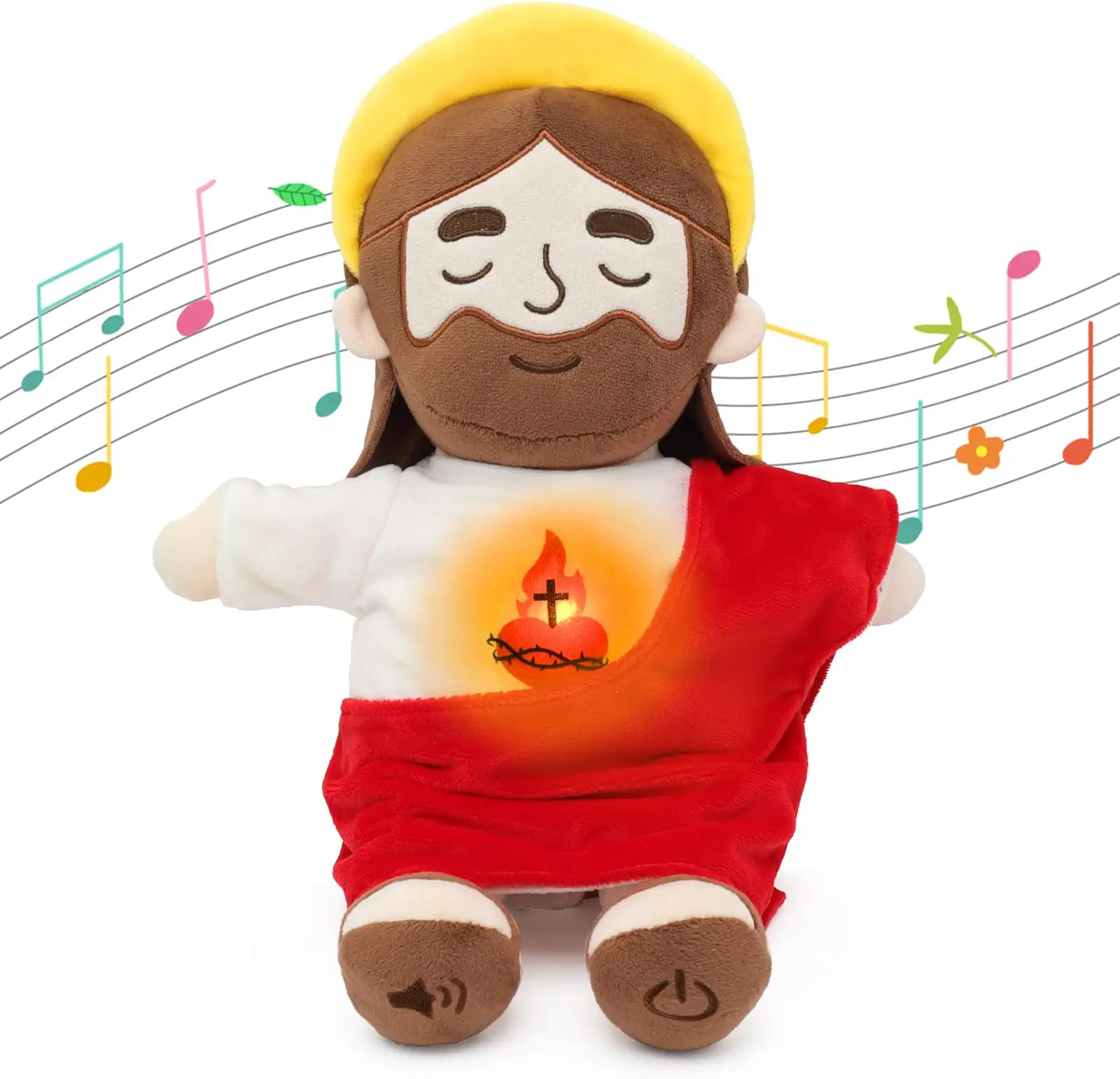
Practically, it helps to:
- Choose a specific place to keep the doll when it is not being used, such as a shelf or small basket.
- Include the child in caring for the doll, like straightening its clothes or placing it gently near a cross or picture of the Holy Family.
- Remember that some wear and tear is a sign of love, not disrespect.
In my own home, our plush baby Jesus doll has a few scuffs and slightly faded fabric now. Instead of seeing that as a problem, I’ve come to view it as a record of all the nights it was held, the prayers whispered, and the little hearts that learned, in their own way, that Jesus is near.
Frequently asked questions about plush baby Jesus dolls
1. Is it okay for children to play with a plush baby Jesus doll?
In many Catholic homes, yes. A plush baby Jesus doll is usually meant to be held and loved, not just displayed. It can help children feel that Jesus is close to them in their real lives. At the same time, parents can gently guide kids to treat the doll with kindness, explaining that it represents someone very special. The goal is a mix of reverence and warmth, not fear or perfectionism.
2. How can I use a plush baby Jesus doll in family prayer?
You might place the doll in the center of a small prayer table, let a child hold it during bedtime prayers, or bring it out especially during Advent and Christmas. Some families say a short prayer such as, “Jesus, thank You for being close to us,” while a child hugs the doll. There is no fixed formula. The main thing is to keep it simple, peaceful, and consistent enough that the child starts to associate the doll with quiet time with God.
3. Is a plush baby Jesus doll a good Baptism or baby gift?
Many people feel it is. A plush baby Jesus doll can be a gentle, faith-filled gift that does not overwhelm new parents but still carries a clear spiritual meaning. It can grow with the child, from crib decoration to bedtime companion to a familiar presence in a prayer corner. Adding a simple note or a short prayer card can make the gift even more personal without being heavy or complicated.
4. How do I explain the difference between this doll and a regular toy?
You do not need a long explanation. A short sentence like, “This is baby Jesus; we play gently and talk to Him in our prayers,” can be enough. Over time, children notice that this doll is treated a bit more carefully, perhaps kept near religious items or included in prayer. They learn from what they see. Your example of handling it with respect, but not with fear, will teach more than many words.
5. What if my child loses interest in the doll?
Children go through phases, and that is normal. If your child stops using the plush baby Jesus doll for a while, you can quietly place it in a prayer corner or on a shelf where it remains visible. Often, at a different moment or age, the child may rediscover it on their own. Faith in family life is a long journey made of seasons; it is okay if certain things are more meaningful at some times than others.
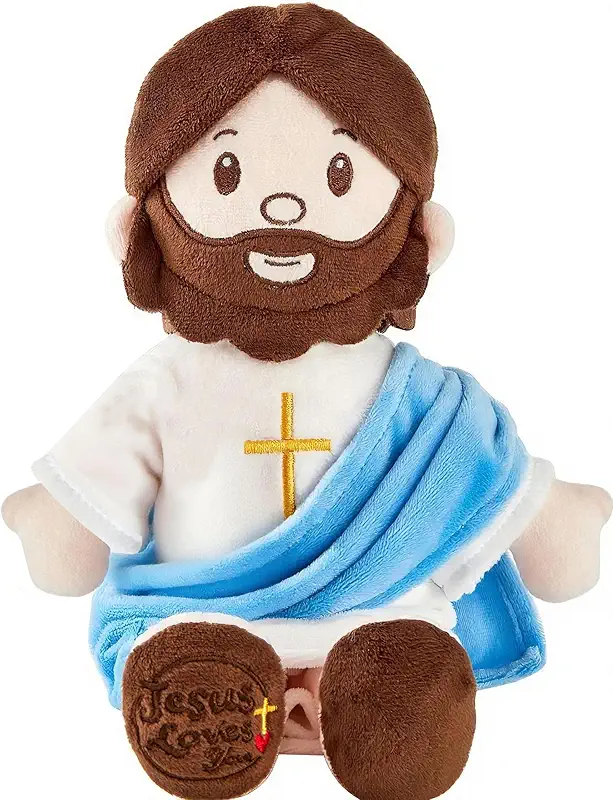
In the end, a plush baby Jesus doll is a small thing. It is not the center of our faith, and it does not replace the deeper life of prayer, the sacraments, or the life of the Church. Yet in the hands of a child, it can carry a surprising amount of meaning. It can be a steady, soft reminder that Jesus meets us in our homes, in our mess, in our bedtime routines and car rides and quiet afternoons.
If you sense that a plush baby Jesus doll might help your family express faith in a simple, tangible way, it is worth exploring. There is no pressure to do things a certain way. Each household finds its own path. Sometimes that path includes a little fabric reminder that God once came among us as a baby, and that He still chooses to be close.