Jesus dolls
Jesus Dolls
Gentle faith at home
For many Catholic families, Jesus dolls have become a quiet and tender way to let children draw close to Jesus in their everyday world. They are not toys in the usual sense, and they are not decorations either. They sit somewhere in between, where prayer, play, and affection meet in a very natural way.
I still remember the first time I brought a soft Jesus doll into our home. I was a bit unsure, wondering if it might feel strange or disrespectful. But what I actually saw was my child gently hugging it before bedtime, whispering a simple prayer in a way that felt honest and unforced. It wasn’t about teaching a lesson. It was simply about making space for Jesus in the middle of normal family life.
Over time, I came to see these dolls as small reminders: a face that children can recognize, hands that they can hold, a visible sign that Jesus is not distant from their joys and worries. In a world full of noise, screens, and distractions, a quiet and familiar figure resting on a bed or a bookshelf can speak very softly to a child’s heart.
What Jesus dolls can mean in a Catholic home
In a Catholic home, we are used to having crucifixes, holy cards, statues, and rosaries. A Jesus doll fits into that same world, but in a softer and more child-centered way. It can become part of bedtime routines, quiet moments during the day, and even times when a child feels anxious or lonely.
These dolls are not meant to replace prayer, Mass, or the sacraments. They certainly cannot replace a real relationship with the living Jesus. Instead, they can gently support that relationship, especially for younger children who respond strongly to what they can touch and hold.
When my own child was very small, the Jesus doll often ended up tucked under an arm in the car seat, or sitting at the table during snack time. I did not make a big deal out of it. I simply let it happen. It became a quiet sign that Jesus belonged in every place of the house, not just on a high shelf or in a church building.
Many parents find that religious images can help children begin to recognize the face of Jesus, Mary, and the saints. A doll can be another step in that same direction, but with the added warmth of softness and comfort that children naturally seek.
Jesus dolls during bedtime and prayer
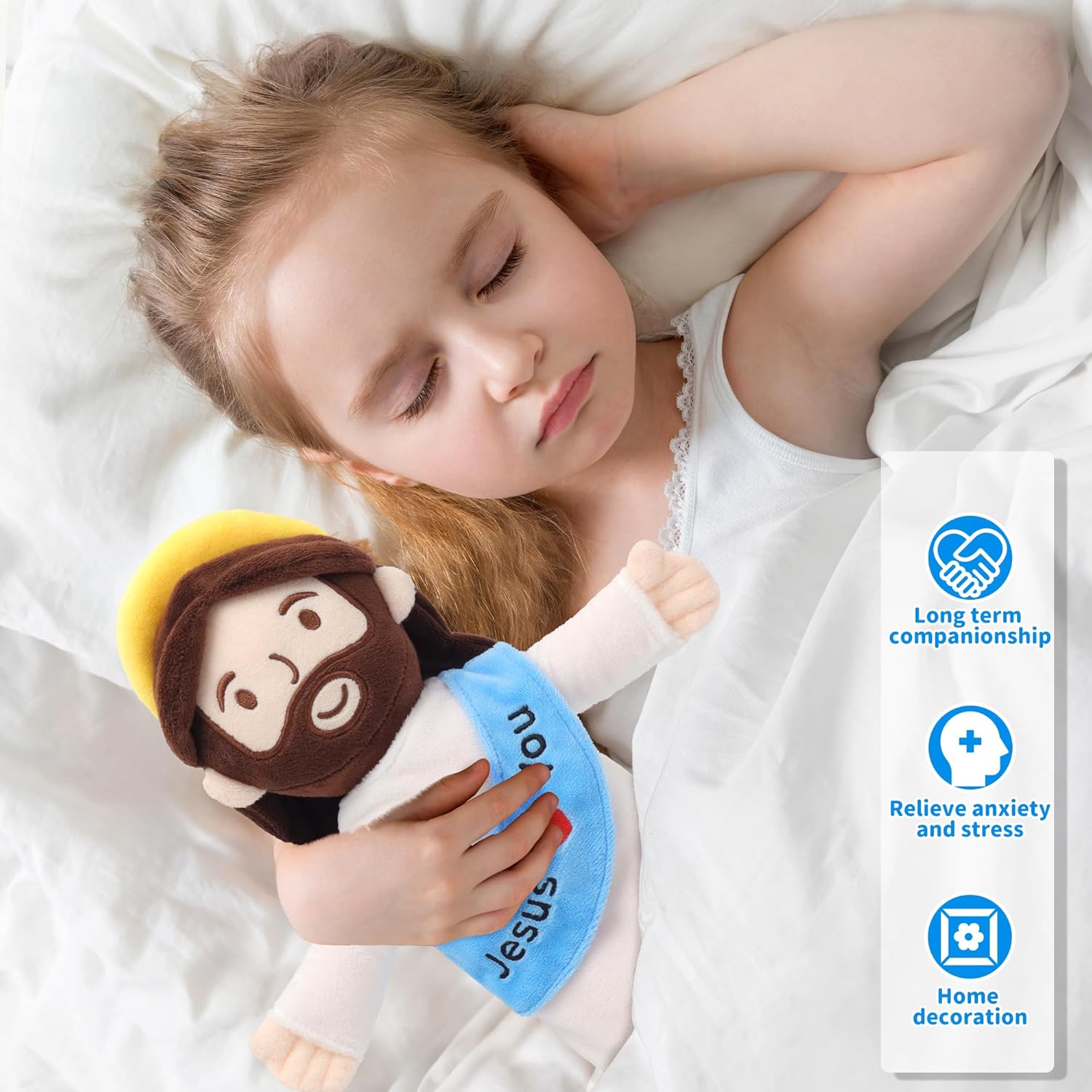
Bedtime is often when children open their hearts most easily. They might talk about what went well, what scared them, and what they are looking forward to. A Jesus doll resting on the pillow or near the nightstand can naturally become part of that moment.
Some families like to keep the doll nearby while they say a short night prayer: an Our Father, a Hail Mary, or just a few simple words straight from the heart. The child may hold the doll while praying, or simply look at it while listening. There is no need to force anything. The important thing is that prayer feels gentle and familiar.
I noticed that on harder days, when my child had been upset or overtired, holding the Jesus doll seemed to help them calm down. Not like a magic fix, but like the way a favorite blanket or stuffed animal can be reassuring. It was a quiet reminder that Jesus cares about even the smallest worries.
Play, imagination, and learning about Jesus
Children learn a lot through play. When they act out stories with their dolls, they are processing what they have seen and heard. With Jesus dolls, this play can gently blend everyday life with the Gospel stories they hear at home or in church.
I have seen children place a Jesus doll at a toy table and “share” pretend bread with stuffed animals, almost like a simple version of the Last Supper. At other times they might have the doll comfort a toy that “got hurt,” reflecting the way they have been told that Jesus cares for those who suffer. None of this needs to be staged. Children often move in this direction on their own.
Parents can join in quietly, perhaps by retelling a simple Gospel scene while the child holds the doll, or by asking, “What would you like to tell Jesus today?” This kind of play does not replace catechism or formal teaching, but it can make the stories of Jesus feel closer and more real.
Different styles of Jesus dolls and how they are used
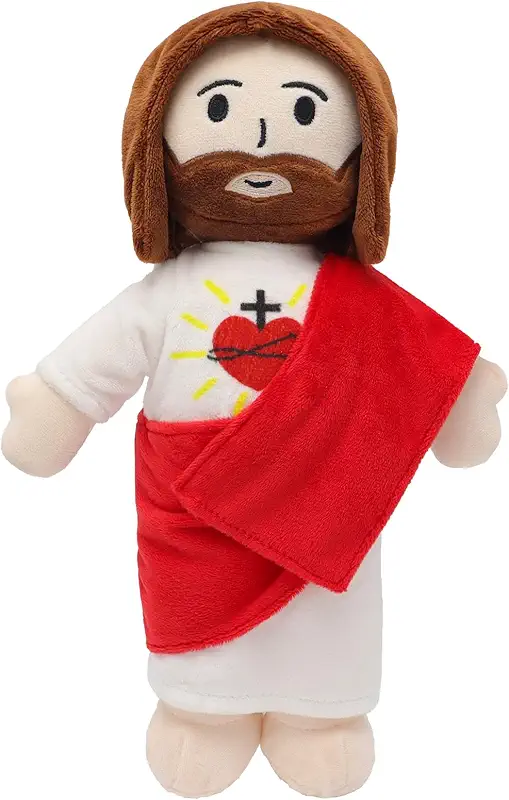
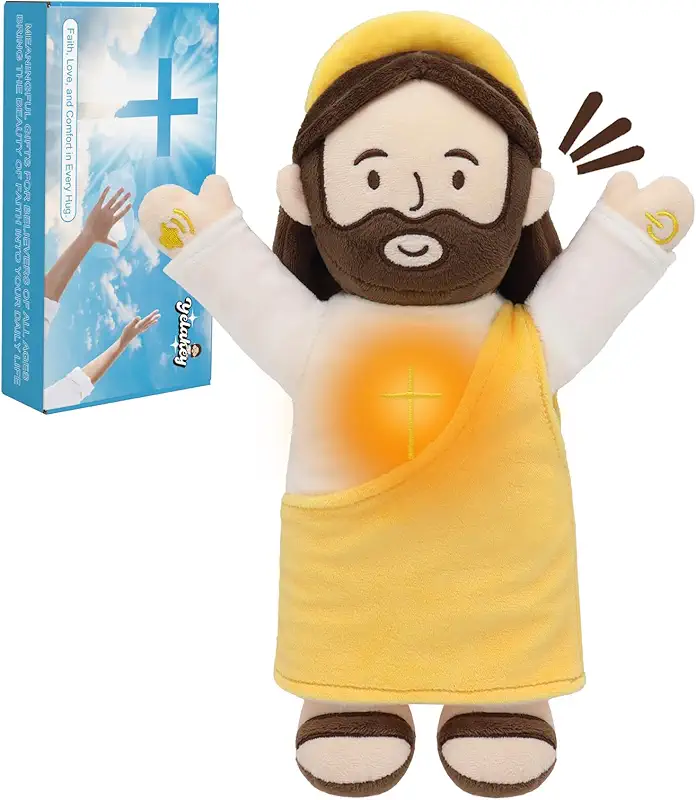
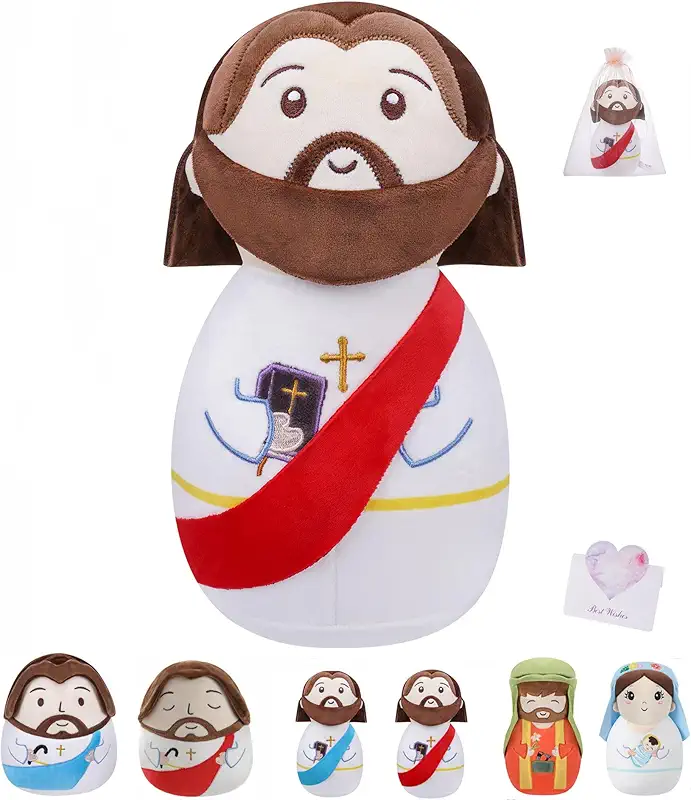
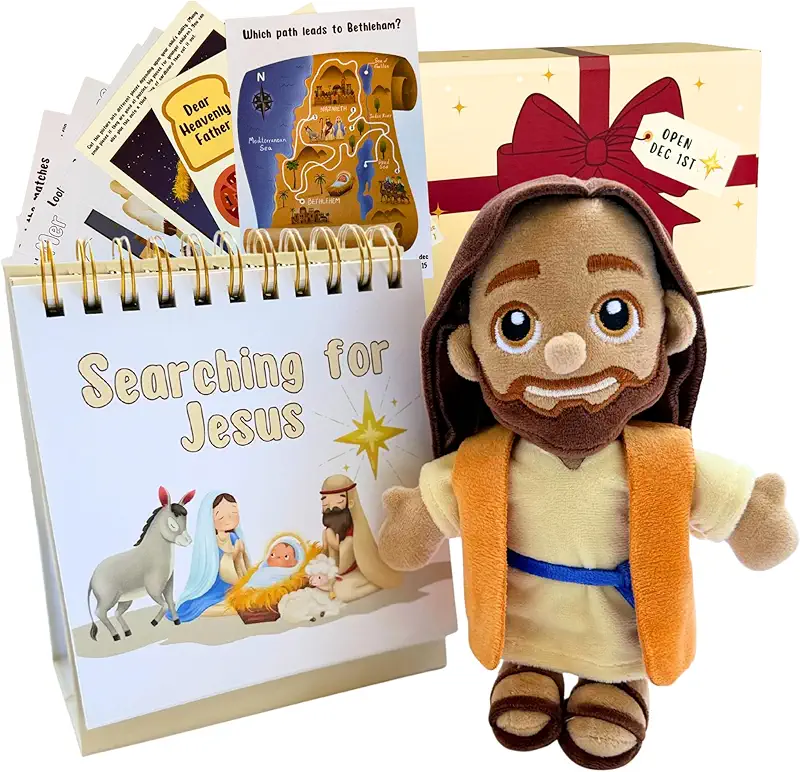
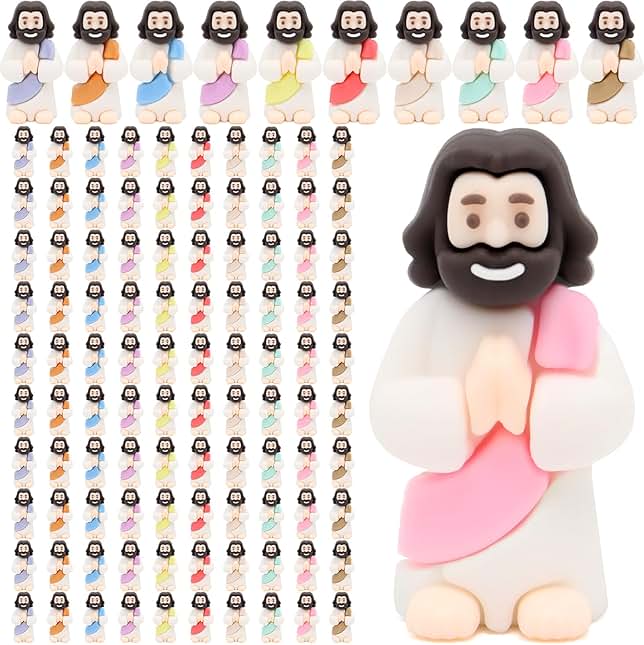
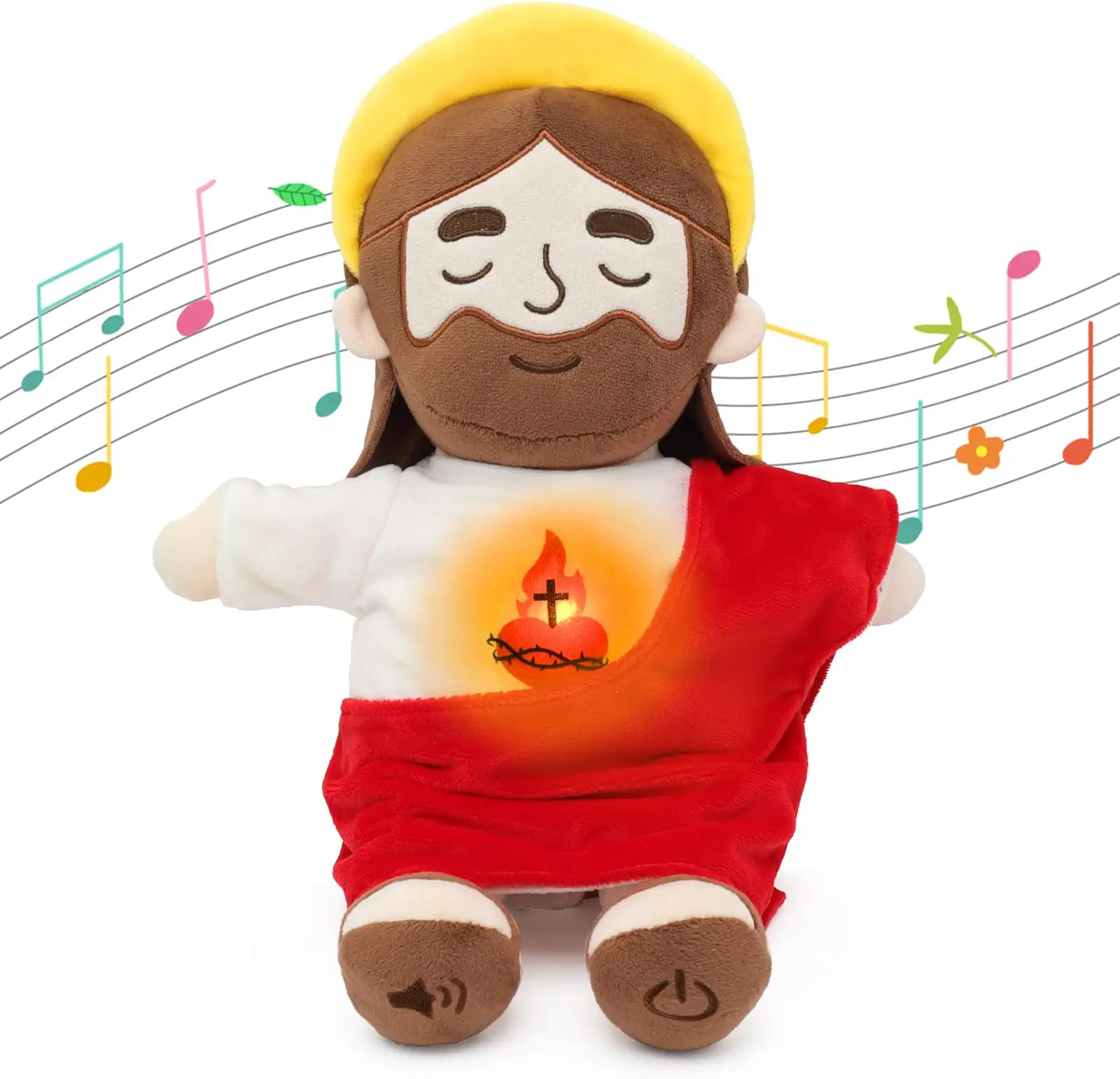
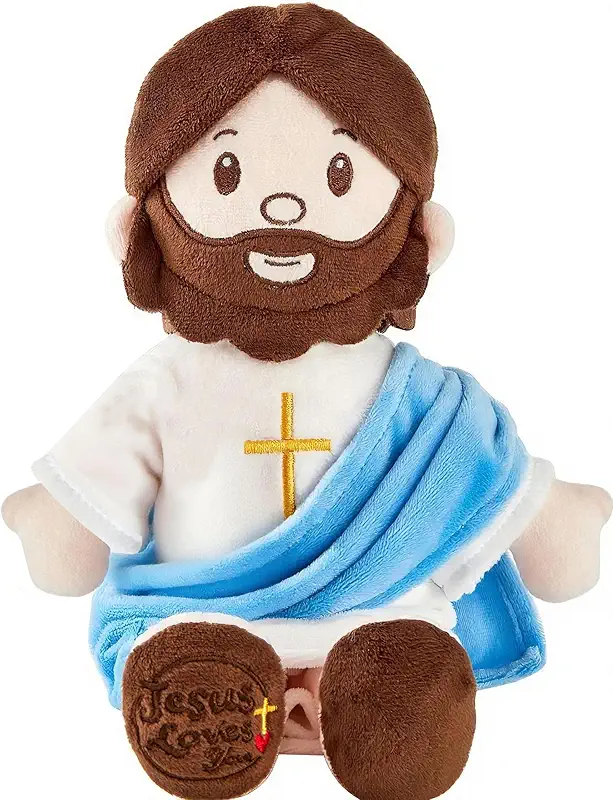
When people talk about Jesus dolls, they might be thinking of a wide range of designs. Some are very simple and cartoon-like, with big friendly eyes and soft clothes. Others are a bit more detailed, with stitched features and outfits that echo traditional images of Jesus. Some even include small accessories, like a removable robe or sandals.
In my experience, the best style depends on the child and on the place where the doll will be kept. For very young children, a very soft, squishy doll with no hard pieces can be the most practical and safe. For older children, a more detailed figure might invite conversations about Jesus’ life, his teaching, and his compassion for people.
Some families prefer to keep the doll on a shelf when not in use, as a gentle reminder in a bedroom or prayer corner. Others are comfortable letting children carry the doll throughout the house. There is no single right way. What matters is that the doll is treated with simple respect, since it represents someone who is deeply loved.
I remember one Advent when we placed a Jesus doll near our little home nativity scene. My child would move the doll closer to the manger as Christmas approached, in a very simple and childlike way. It was not something I had planned, but it turned into a small family tradition that we still repeat.
In other families, the doll may stay on a child’s bed year-round, or be brought along on longer trips as a familiar reminder of God’s presence. Some parents also keep a Jesus doll in a prayer corner or family altar space, where the whole family gathers at times to pray the rosary or reflect on Scripture.
Practical considerations when choosing Jesus dolls
When people look for Jesus dolls, they often wonder what to keep in mind. While every family is different, a few common points can be helpful: safety, durability, and the overall feel of the doll.
For babies and toddlers, soft materials and stitched features are usually best. Avoid very small parts that could break off or be swallowed. For older children, you might be more open to added details, but softness and comfort usually still matter a lot, especially if the doll is used for sleeping or quiet time.
It may also help to notice the expression on the doll’s face. Some dolls show a broad smile, others a calm and peaceful look. There is no perfect choice, but many parents look for a gentle, kind expression that reflects how they speak about Jesus to their children.
Another practical point is how easy the doll is to clean. Life with children can be messy, and dolls that can be spot-cleaned or gently washed can be more manageable over time. This becomes especially important if the doll goes outdoors, travels in backpacks, or spends time on the floor with other toys.
Finally, consider where the Jesus doll will “live” in your home. A place of honor does not need to be fancy. It might be a simple shelf at a child’s eye level, a small basket with other faith-related items, or a corner of a bedroom set aside for prayer. Knowing where the doll belongs can give children a sense of routine and care.
Jesus dolls as quiet companions in different seasons of life
Although we usually think of Jesus dolls for younger children, they can quietly accompany older kids and even adults through different seasons of life. A teenager might not carry a doll around, but they may appreciate its presence on a shelf or desk, especially in times of stress or worry.
I have seen older relatives smile with real tenderness when they notice a Jesus doll in a child’s room. It can spark memories of their own childhood faith, or stir up a conversation about how they turned to God when life was difficult. In that sense, the doll can become a bridge between generations.
There was a time when one of our children struggled with being away from home overnight. We slipped a small Jesus doll into the overnight bag, not as a solution to every worry, but as a familiar reminder that they were not alone. It did not erase all fear, but it gave them something steady to hold onto in an unfamiliar place.
For adults, a Jesus doll might stay mostly in the background, but it can still carry meaning. It might sit near a Bible, a rosary, or a journal, as one more reminder to bring the concerns of the day to God in prayer. Even if it is rarely touched, its quiet presence can speak in a way that words sometimes cannot.
Bringing Jesus dolls into prayer corners and family traditions
Many Catholic families create a small prayer corner, even in a modest home. It might hold a crucifix, a candle (real or electric), a small statue, and perhaps a Bible or missal. Adding a Jesus doll to that space can help children feel that the corner belongs to them too.
During Lent or Advent, some families let the children move the Jesus doll closer to the crucifix or manger scene as the season progresses. During Easter, the doll might be placed near flowers or bright cloth to reflect the joy of the Resurrection. These small gestures do not need long explanations. Children often understand them in a simple but deep way.
Over the years, Jesus dolls can become part of family stories. A doll that once belonged to an older sibling might be passed down to a younger one. A small stain or a loose thread can carry memories of trips, bedtime talks, or moments of unexpected peace.
I have found that when we treat these dolls with simple care—neither as fragile museum pieces nor as disposable toys—they can help children grow up with a natural sense that Jesus belongs in the center of their lives. No pressure, no big speeches, just quiet presence.
Frequently asked questions about Jesus dolls
Are Jesus dolls appropriate for Catholic families?
Many Catholic families do find Jesus dolls appropriate, especially when they are treated with respect and used to support prayer and devotion. They are not blessed objects by themselves, and they are not meant to replace statues, crucifixes, or other traditional sacramentals. Instead, they can sit alongside those things as a gentle help for children who relate strongly to what they can hold and see.
How can I introduce a Jesus doll to my child?
A simple approach usually works best. You might place the doll in the child’s room or prayer corner and say something like, “This reminds us of how much Jesus loves you.” You can invite the child to hold the doll during bedtime prayers or quiet moments, without forcing any particular reaction. Over time, children often find their own way of including the doll in their daily life.
Is it okay if my child plays with the Jesus doll like a regular toy?
Many parents allow normal, gentle play, as long as the doll is not treated in a mocking or careless way. Children often naturally “talk” to the doll, feed it pretend food, or include it in their games. This can be a meaningful way for them to express affection and to picture Jesus close to them in their everyday world. Parents can gently guide children toward respectful play without making them feel tense or watched.
Can a Jesus doll be blessed by a priest?
In many parishes, a priest is willing to bless devotional items that families bring, including Jesus dolls. This does not turn the doll into a magical object, but it dedicates it to God and asks for His grace to be present in the life of the person who uses it. If you are unsure, you can simply ask your parish priest or deacon if it is possible to have the doll blessed after Mass.
How do I choose among different Jesus dolls online?
When looking at different options, it can help to consider the child’s age, the softness and safety of the materials, the expression on the doll’s face, and how easy it will be to clean. You might also ask yourself where you plan to keep the doll—on a bed, in a prayer corner, or on a shelf—and choose a size and style that fits that space. Reading other families’ experiences can also give a sense of how each doll holds up over time.